Repurposing Evergreen Content for Multi-Channel Growth
In today's digital landscape, evergreen content remains a vital component of a successful marketing strategy. Its relevance doesn't fade with time, making it an invaluable asset when repurposed across various channels.

By adapting evergreen content to fit different platforms, businesses can significantly enhance their reach and impact. This approach not only maximizes the ROI on existing content but also streamlines the process of creating new material.
The key lies in understanding how to breathe new life into timeless content, making it suitable for diverse marketing channels. This not only boosts multi-channel growth but also reinforces a brand's message across different audiences.
Key Takeaways
- Evergreen content remains relevant over time, offering long-term marketing value.
- Repurposing this content can significantly enhance a brand's reach and impact.
- Adapting content for different platforms maximizes ROI and streamlines content creation.
- Understanding how to repurpose content is crucial for multi-channel growth.
- Evergreen content, when repurposed, can reinforce a brand's message across diverse audiences.
Understanding Evergreen Content and Its Value
Understanding evergreen content is crucial for maximizing multi-channel growth. Evergreen content refers to the type of content that remains relevant and valuable to audiences over a long period, continuing to attract traffic, generate leads, and support marketing efforts.
Evergreen content is characterized by its timeless topics, comprehensive information, and ongoing relevance. It is not tied to specific events or trends that may quickly become outdated. Instead, it provides lasting value to readers, making it a cornerstone of effective content strategies.
What Makes Content "Evergreen"
Several factors contribute to making content evergreen:
- Timeless topics that continue to interest audiences over time.
- Comprehensive information that covers a subject in depth.
- Ongoing relevance that keeps the content useful and applicable.
For instance, a guide on "How to Improve Your SEO" remains relevant years after its publication because it addresses a fundamental need in digital marketing. As Rand Fishkin, a well-known figure in the SEO community, once said, "Content is the backbone of SEO." This underscores the importance of creating high-quality, evergreen content.
"The key to successful evergreen content is its ability to stand the test of time, remaining relevant and useful to your audience." -
Content Marketing Expert
The Long-Term ROI of Evergreen Assets
Evergreen content provides a significant long-term return on investment (ROI). Unlike time-sensitive content that may quickly become obsolete, evergreen assets continue to attract organic traffic, generate leads, and support various marketing channels over time.
| Content TypeInitial InvestmentLong-Term ROI | ||
| Evergreen Guide | $1,000 | $5,000 |
| News Article | $500 | $0 (after 1 year) |
| How-To Video | $2,000 | $10,000 |
As shown in the table, evergreen content like guides and how-to videos can yield a substantial ROI compared to time-sensitive content like news articles.
https://www.youtube.com/watch?v=xfEFNr0eQWY
By focusing on evergreen content, businesses can create a sustainable content strategy that supports multi-channel growth, driving long-term success and maximizing their ROI.
Content Repurposing: Strategies That Drive Results
By repurposing content, you can reach new audiences and reinforce your message across different channels. This approach not only maximizes your content's potential but also enhances your overall marketing strategy.
Identifying High-Performing Content for Repurposing
The first step in content repurposing is to identify high-performing content that can be adapted for different channels. This involves analyzing your existing content's performance using metrics such as engagement rates, page views, and social shares.
Key metrics to consider:
- Engagement rates (likes, comments, shares)
- Page views and unique visitors
- Average time spent on the page
- Conversion rates (if applicable)
For instance, a blog post that has garnered significant engagement on social media can be repurposed into a video or infographic to reach a broader audience.
Transforming Content Across Different Formats
Transforming content into various formats is crucial for maximizing its reach. For example, turning a detailed report into an infographic or a series of social media posts can make the information more digestible and shareable.
| Original ContentRepurposed FormatBenefits | ||
| Blog Post | Video, Infographic, Podcast | Increased engagement, broader reach |
| Whitepaper | Blog series, Social media posts | Enhanced credibility, simplified complex information |
| Webinar | Transcript, Infographic highlights | Extended lifespan, easier consumption |
As the saying goes, "Content is king," and repurposing it can make it even more effective.
"The key is not to prioritize what's on your schedule, but to schedule your priorities." - Stephen Covey

Updating and Refreshing Outdated Content
Updating outdated content is essential to keep it relevant and effective. This involves reviewing old content, identifying areas that need updating, and refreshing the information to align with current trends and data.
Steps to update content:
- Review existing content for relevance
- Update statistics, trends, and data
- Refine keywords and meta tags for better SEO
- Republish updated content across relevant channels
By implementing these strategies, you can breathe new life into old content and continue to drive results from your existing assets.
Multi-Channel Distribution Tactics
To maximize the reach of your evergreen content, it's crucial to employ a multi-channel distribution strategy. This approach enables you to tap into diverse audience segments, enhancing your brand's visibility and engagement.
Social Media Platform Optimization
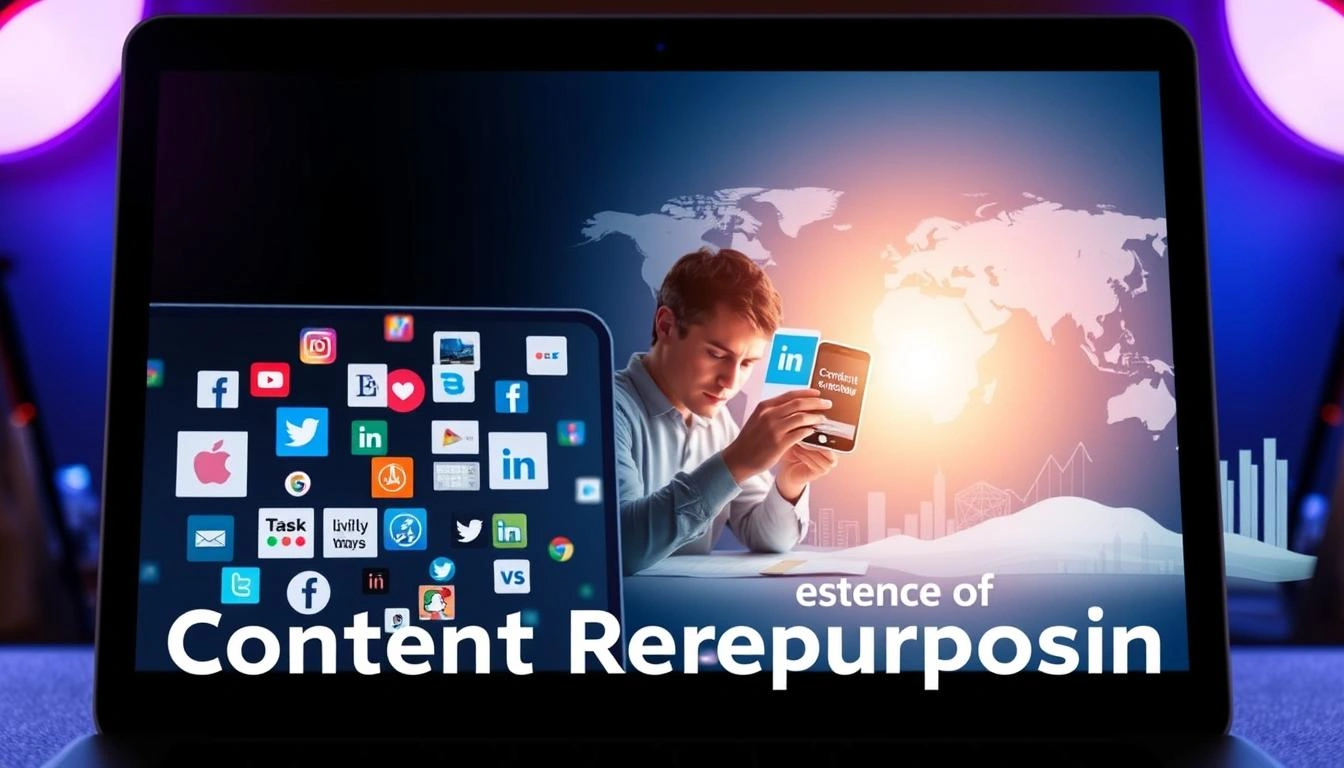
Optimizing your repurposed content for various social media platforms is vital. Each platform has its unique features and audience preferences. For instance, Instagram is visually driven, while Twitter is more text-oriented.
- Tailor your content format to suit each platform.
- Use relevant hashtags to increase discoverability.
- Engage with your audience through comments and direct messages.
By adapting your content to fit different social media platforms, you can significantly boost your content's reach and engagement.
Email Marketing Integration
Integrating your repurposed content into email marketing campaigns can help you reach your subscribers more effectively. Consider the following strategies:
| Email Content TypePurposeBenefits | ||
| Newsletters | Keep subscribers informed | Regular updates, increased engagement |
| Dedicated Emails | Highlight specific content | Focused attention, higher click-through rates |
Video and Podcast Adaptations
Adapting your content into video and podcast formats can help you tap into different audience preferences. Video content can be particularly effective on platforms like YouTube and TikTok, while podcasts can reach audiences on the go.
Community and Forum Engagement
Engaging with online communities and forums related to your niche can help you build brand awareness and foster discussions. Share your repurposed content where relevant, and be sure to follow community guidelines.
By implementing these multi-channel distribution tactics, you can significantly enhance the reach and impact of your repurposed content, driving more traffic and engagement for your brand.
Conclusion
Repurposing evergreen content is a strategic approach to achieving multi-channel growth. By transforming high-performing content into various formats, businesses can expand their reach and reinforce their brand message across different platforms.
As discussed, identifying and updating evergreen content is crucial for maximizing ROI. By doing so, companies can breathe new life into existing assets, making them relevant for new audiences and marketing channels.
Effective multi-channel distribution tactics, including social media optimization, email marketing, and video adaptations, enable businesses to engage with their target audience more effectively. By leveraging evergreen content across these channels, companies can drive sustained growth and improve their marketing ROI.
Ultimately, a well-planned content repurposing strategy allows businesses to get the most out of their existing content, fostering a robust online presence and supporting long-term marketing goals.
FAQ
What is evergreen content?
Evergreen content refers to content that remains relevant and continues to attract traffic, generate leads, and support marketing efforts over time, without becoming outdated or obsolete.
How do I identify high-performing content for repurposing?
To identify high-performing content, analyze your website analytics, social media engagement, and email marketing metrics to determine which pieces have resonated with your audience and driven results.
What are some effective formats for repurposing content?
Some effective formats for repurposing content include turning blog posts into videos, infographics, or podcasts, as well as transforming data-driven content into interactive tools or quizzes.
How often should I update and refresh my evergreen content?
It's a good practice to review and update your evergreen content regularly, ideally every 6-12 months, to ensure it remains accurate, relevant, and optimized for search engines.
Can I repurpose content for different social media platforms?
Yes, repurposing content for different social media platforms is a great way to maximize your reach and engagement. Tailor your content to each platform's unique features and audience preferences.
How can I measure the ROI of my repurposed content?
To measure the ROI of your repurposed content, track key metrics such as website traffic, engagement, lead generation, and conversion rates across different channels and formats.
What are some best practices for repurposing content for email marketing campaigns?
When repurposing content for email marketing campaigns, focus on creating personalized and relevant content that resonates with your subscribers, and use attention-grabbing subject lines to boost open rates.
About the Author
A results-driven content writer with a sharp eye for detail and a passion for storytelling. Specializes in crafting clear, engaging, and SEO-optimized content across industries including healthcare, education, business, and tech.