Behavioral Triggers in Email Automation: Mapping Intent to Action
In today's digital landscape, understanding customer behavior is crucial for businesses to stay ahead. Behavioral triggers play a significant role in email automation, enabling companies to respond to customer actions in real-time.
By leveraging email workflows, businesses can map customer intent to meaningful actions, driving engagement and conversion. This approach allows for personalized communication, enhancing the customer experience.

The strategic use of behavioral triggers in email automation helps businesses to nurture leads and build strong customer relationships. It's about creating a seamless interaction between the customer's actions and the business's response.
Key Takeaways
- Behavioral triggers enhance customer engagement through personalized communication.
- Email automation allows businesses to respond to customer actions in real-time.
- Mapping customer intent to meaningful actions drives conversion.
- Email workflows help in creating a seamless customer experience.
- Strategic use of behavioral triggers nurtures leads and builds customer relationships.
Understanding Behavioral Triggers in Email Marketing
As email marketing continues to evolve, the use of behavioral triggers has become a key strategy for businesses seeking to engage their audience more effectively. Behavioral triggers in email marketing refer to the use of customer actions or behaviors to trigger specific email communications. This approach allows businesses to move beyond traditional, static email campaigns and instead, deliver dynamic, personalized content that resonates with their audience.
Definition and Importance of Behavioral Triggers
Behavioral triggers are actions taken by customers that prompt an email response, such as making a purchase, abandoning a cart, or engaging with previous emails. The importance of behavioral triggers lies in their ability to personalize the customer experience, making interactions feel more relevant and timely. By leveraging these triggers, businesses can increase engagement, drive conversions, and foster loyalty.
The table below outlines some common behavioral triggers and their potential applications in email marketing:
| TriggerEmail ActionGoal | ||
| Purchase | Thank you email, Follow-up offer | Encourage repeat business |
| Cart Abandonment | Reminder email | Recover lost sales |
| Email Engagement | Personalized content, Special offers | Increase engagement |
How Behavioral Triggers Differ from Traditional Email Marketing
Unlike traditional email marketing, which often relies on static segmentation and generic messaging, behavioral triggers enable businesses to respond dynamically to customer behaviors. This shift towards action-based marketing allows for a more nuanced understanding of customer intent, enabling businesses to tailor their communications for maximum impact.
By adopting behavioral triggers, businesses can significantly enhance the effectiveness of their email marketing campaigns, driving higher engagement and conversion rates. As the digital landscape continues to evolve, the ability to leverage customer behaviors in real-time will become increasingly crucial for businesses seeking to stay ahead of the curve.
The Psychology Behind Customer Email Behavior
To maximize the effectiveness of email marketing, it's essential to delve into the psychological aspects that drive customer behavior. Understanding these elements can help businesses create more targeted and engaging email campaigns.
Consumer Behavior Patterns in Digital Environments
Consumer behavior in digital environments is influenced by various psychological factors, including personal preferences, browsing history, and previous interactions with a brand. By analyzing these factors, businesses can identify patterns that help in predicting future customer actions. For instance, a customer who frequently purchases from an online retailer may be more likely to respond to emails promoting similar products.
https://www.youtube.com/watch?v=xSIEpPFSqqY
Mapping Customer Intent to Meaningful Actions
Mapping customer intent involves understanding the motivations behind customer actions and translating them into actionable email marketing strategies. This can include sending personalized recommendations based on browsing history or offering exclusive discounts to loyal customers. By doing so, businesses can create a more engaging and relevant email experience.
| Customer IntentMeaningful Actions | |
| Browsing History | Personalized Product Recommendations |
| Purchase History | Exclusive Discounts or Loyalty Rewards |
| Abandoned Cart | Reminder Emails with Special Offers |
By understanding and mapping customer intent, businesses can significantly enhance the effectiveness of their email marketing campaigns, leading to improved customer engagement and conversion rates.
Types of Behavioral Triggers That Drive Engagement
To drive engagement, marketers must leverage different types of behavioral triggers that resonate with their audience. Behavioral triggers are actions or events that prompt automated emails, making the marketing process more personalized and timely.
Browse-Based Triggers
Browse-based triggers are activated by how customers interact with a website. This includes:
Abandoned Product Views
When a customer views a product but doesn't make a purchase, an email can be triggered to remind them about the product.
Category Interest Signals
If a customer frequently browses a specific category, emails showcasing products from that category can be sent to them.
Purchase-Based Triggers
Purchase-based triggers are related to the buying behavior of customers. Examples include:
Post-Purchase Follow-ups
Emails sent after a purchase to thank the customer or request feedback.
Replenishment Reminders
Reminders sent when a product is likely to run out based on the customer's purchase history.
| Trigger TypeDescriptionExample | ||
| Browse-Based | Triggered by browsing behavior | Abandoned cart emails |
| Purchase-Based | Triggered by purchase behavior | Post-purchase thank you emails |
Engagement-Based Triggers
These triggers are based on how customers engage with emails and other content. For instance, if a customer frequently opens emails related to a specific topic, more content on that topic can be sent to them.
Inactivity-Based Triggers
Inactivity-based triggers target customers who have become inactive. Re-engagement campaigns can be launched to win back these customers.
By understanding and implementing these different types of behavioral triggers, businesses can create more effective email marketing campaigns that drive engagement and conversion.
Designing Effective Email Workflows for Customer Journeys
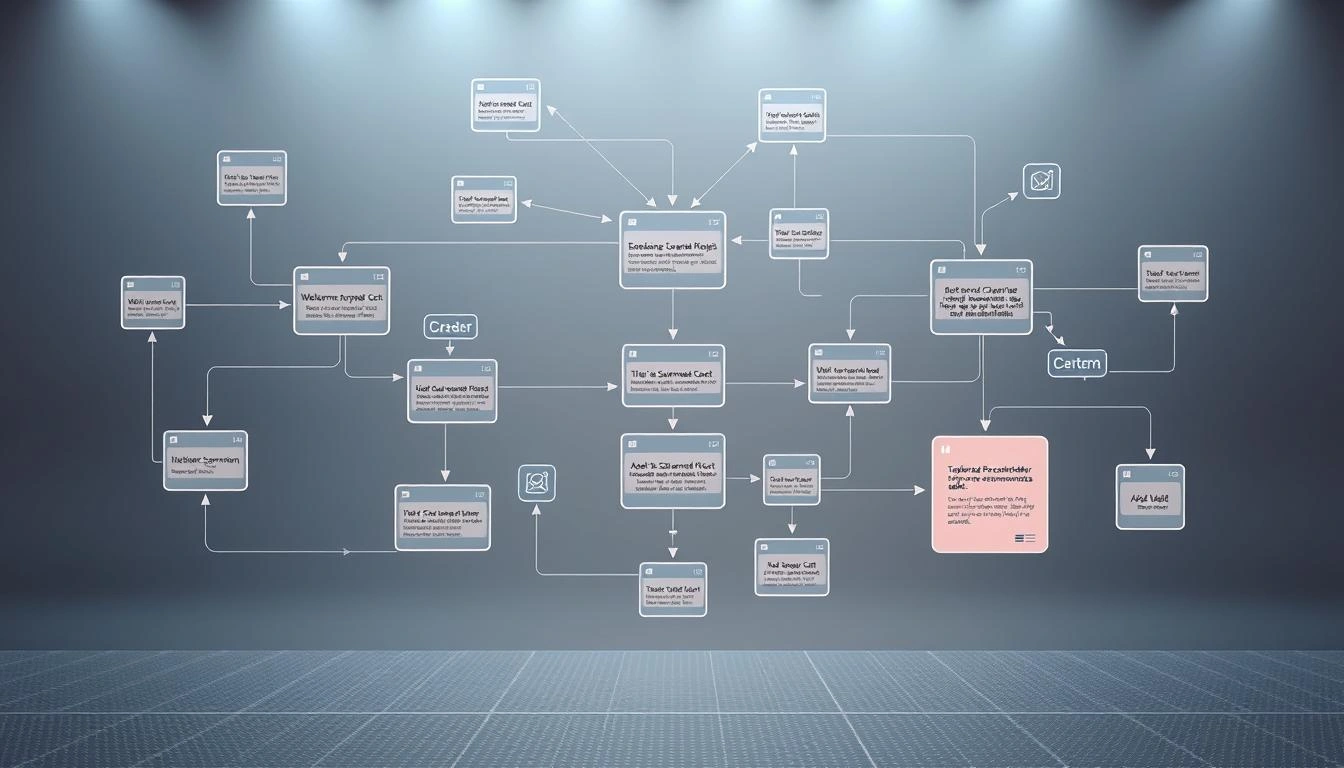
To create a seamless customer experience, businesses must design email workflows that cater to the different stages of the customer journey. This involves understanding the customer's intent and behavior at each stage and crafting emails that resonate with them.
Acquisition Journey Workflows
The acquisition stage is all about attracting new customers. Email workflows at this stage should focus on building awareness and generating interest. Welcome emails and nurture campaigns are crucial in setting the tone for the customer's journey. By providing value and showcasing the brand's unique selling proposition, businesses can effectively draw in potential customers.
Conversion Journey Workflows
Once a lead is acquired, the next step is to convert them into a paying customer. Email workflows at this stage should be designed to build trust and demonstrate value. This can be achieved through targeted promotional emails, product recommendations, and exclusive offers that encourage the lead to make a purchase.
Retention Journey Workflows
Retention is about keeping customers engaged and loyal to the brand. Email workflows here should focus on personalization and delivering ongoing value. Newsletters, loyalty programs, and feedback requests are effective strategies for maintaining a strong relationship with customers and ensuring long-term retention.
By tailoring email workflows to each stage of the customer journey, businesses can create a more personalized and engaging experience, ultimately driving higher conversion rates and customer loyalty.
Implementing Behavioral Segmentation Strategies
Effective email marketing relies heavily on understanding customer behavior, making behavioral segmentation a crucial strategy. By dividing the email list into targeted groups based on specific behaviors, marketers can significantly improve the relevance and effectiveness of their campaigns.
Data Collection Methods for Behavioral Insights
To implement behavioral segmentation, it's essential to collect relevant data on customer behavior. This can be achieved through various methods, including:
- Tracking website interactions, such as page views and time spent on site
- Monitoring email engagement, including opens, clicks, and conversions
- Analyzing purchase history and product preferences
By leveraging these data collection methods, businesses can gain a deeper understanding of their customers' preferences and behaviors, enabling more targeted marketing efforts.
Creating Dynamic Segments Based on Behavior
Once the necessary data is collected, creating dynamic segments is the next step. These segments are based on specific customer behaviors and can be adjusted in real-time as new data becomes available.
| SegmentBehavioral TriggerEmail Content | ||
| New Subscribers | Subscription | Welcome email with discount |
| Active Customers | Recent Purchase | Personalized product recommendations |
| Inactive Customers | No Purchase in 3 months | Re-engagement campaign with special offer |
By creating these dynamic segments, marketers can ensure that their email campaigns are highly relevant to the recipient, increasing the likelihood of engagement and conversion.
Crafting Compelling Content for Triggered Emails
Triggered emails offer a unique opportunity to engage customers with tailored content, but their success hinges on effective personalization, subject lines, and CTAs. To maximize their potential, marketers must understand how to craft compelling content that resonates with recipients.
Personalization Techniques That Convert
Personalization is key to making triggered emails effective. Techniques include using the recipient's name, tailoring content based on past purchases or browsing history, and leveraging location-based data. For instance, an email that recommends products based on a customer's previous purchases can significantly increase the likelihood of conversion.
| Personalization TechniqueDescriptionExample | ||
| Using Recipient's Name | Addressing the customer by name | "Hi John, we have a special offer." |
| Content Based on Past Purchases | Recommending products similar to past buys | "You might like these products based on your previous purchases." |
Subject Line Strategies for Triggered Emails
The subject line is often the deciding factor in whether an email is opened. Effective strategies include creating a sense of urgency, personalizing the subject line, and ensuring it is relevant to the content of the email. For example, a subject line that reads "Your Cart Awaits: Complete Your Purchase" can encourage recipients to return to their cart and complete the purchase.

Call-to-Action Optimization
Optimizing the call-to-action (CTA) is crucial for converting email recipients into customers. This involves making the CTA prominent, using action-oriented language, and ensuring it is relevant to the email's content. A/B testing different CTAs can help determine which ones perform best.
By focusing on personalization, crafting compelling subject lines, and optimizing calls-to-action, marketers can significantly enhance the effectiveness of their triggered email campaigns.
Measuring and Optimizing Your Email Workflows
To truly understand the effectiveness of your email marketing, you need to measure and optimize your email workflows. This involves tracking key performance indicators (KPIs) that provide insights into how your emails are performing and identifying areas for improvement.
Key Performance Indicators for Behavioral Email Campaigns
Understanding the right KPIs is crucial for evaluating the success of your behavioral email campaigns. These metrics help you gauge the impact of your email marketing efforts and make data-driven decisions.
Engagement Metrics
Engagement metrics, such as open rates and click-through rates (CTR), are vital indicators of how well your emails are resonating with your audience. A high open rate indicates that your subject lines are effective, while a high CTR suggests that your email content is compelling.
Conversion Metrics
Conversion metrics measure the ultimate goal of your email campaigns: driving sales, sign-ups, or other desired actions. Conversion rates help you understand how effectively your emails are persuading recipients to take the desired action.
| MetricDescriptionImportance | ||
| Open Rate | Percentage of recipients who open the email | High open rates indicate effective subject lines |
| Click-Through Rate (CTR) | Percentage of recipients who click on a link | High CTR suggests compelling email content |
| Conversion Rate | Percentage of recipients who complete a desired action | Directly impacts the success of your campaign goals |
A/B Testing Frameworks for Continuous Improvement
A/B testing is a powerful method for optimizing your email workflows. By comparing different versions of an email, you can identify which elements perform better and make informed decisions to enhance your campaigns.
For instance, testing different subject lines can reveal which ones are more effective at getting opens. Similarly, testing different calls-to-action (CTAs) can help determine which ones drive more conversions.
Real-World Success Stories: Email Workflows in Action
Real-world examples demonstrate that well-designed email workflows can dramatically improve customer engagement and conversion rates. By examining these success stories, businesses can gain valuable insights into how to effectively implement email automation strategies.
E-commerce Case Studies
E-commerce businesses have seen significant benefits from implementing targeted email workflows. For instance, an online retailer might use browse-based triggers to send personalized product recommendations to customers who have shown interest in specific categories. This approach not only enhances the customer experience but also drives sales.
| CompanyEmail Workflow StrategyResult | ||
| XYZ Clothing | Abandoned cart reminders | 25% increase in sales |
| ABC Electronics | Post-purchase follow-ups | 30% increase in repeat business |
SaaS and Service-Based Business Examples
SaaS and service-based businesses have also leveraged email workflows to improve customer onboarding and retention. For example, a SaaS company might use engagement-based triggers to send targeted tutorials to new users, enhancing their experience and reducing churn.
By analyzing these real-world success stories, businesses can develop effective email workflows that drive engagement, conversion, and customer loyalty. Whether you're in e-commerce, SaaS, or a service-based industry, the right email automation strategy can make a significant difference in your marketing efforts.
Overcoming Common Challenges in Behavioral Email Marketing
Marketers leveraging behavioral email marketing strategies must overcome a unique set of challenges. While this approach offers personalized and timely engagement with customers, its effectiveness is contingent upon navigating issues that can impact campaign success.
Data Privacy Concerns and Compliance
One of the primary challenges is ensuring data privacy and compliance with regulations such as GDPR and CCPA. Marketers must be transparent about data usage and obtain explicit consent from subscribers. Implementing robust data protection measures is not only a legal requirement but also crucial for maintaining customer trust.
Technical Implementation Hurdles
Technical implementation is another significant hurdle. Integrating behavioral triggers into email marketing campaigns requires sophisticated technology and expertise. Marketers need to ensure their systems can track customer behavior accurately and trigger emails at the right moment, which can be complex and resource-intensive.
Avoiding Trigger Fatigue and Email Overload
Finally, avoiding trigger fatigue and email overload is critical. When customers receive too many emails in quick succession, it can lead to fatigue, decreased engagement, and increased unsubscribe rates. Marketers must strike a balance between staying top-of-mind and overwhelming their audience, using data to optimize the frequency and relevance of their emails.
By addressing these challenges, marketers can enhance the effectiveness of their behavioral email marketing campaigns, leading to better customer engagement and ultimately, improved conversion rates.
Conclusion: The Future of Behavioral Triggers in Email Marketing
The future of email marketing is intricately linked with the evolution of behavioral triggers. As we've explored throughout this article, understanding and leveraging customer behavior is crucial for creating effective email campaigns that drive engagement and conversion.
Behavioral triggers have revolutionized the way businesses interact with their customers, allowing for personalized and timely communications. As data collection methods become more sophisticated, the potential for behavioral triggers to shape customer journeys will continue to grow.
Looking ahead, the integration of AI and machine learning technologies will further enhance the capabilities of behavioral triggers in email marketing. This will enable marketers to predict customer behavior more accurately and tailor their strategies accordingly.
By embracing the power of behavioral triggers, businesses can stay ahead of the curve in the ever-evolving landscape of email marketing, fostering deeper connections with their customers and driving long-term success.
FAQ
What are behavioral triggers in email marketing?
Behavioral triggers in email marketing refer to automated emails sent to customers based on their actions or behavior, such as browsing history, purchase history, or engagement with previous emails.
How do behavioral triggers differ from traditional email marketing?
Behavioral triggers differ from traditional email marketing in that they are triggered by specific customer actions, allowing for a more personalized and responsive approach to customer engagement.
What types of behavioral triggers can be used in email marketing?
Types of behavioral triggers that can be used in email marketing include browse-based triggers, purchase-based triggers, engagement-based triggers, and inactivity-based triggers.
How can businesses use behavioral triggers to drive customer engagement?
Businesses can use behavioral triggers to drive customer engagement by sending targeted and relevant emails based on customer behavior, such as abandoned product views or purchase history.
What are some best practices for implementing behavioral triggers in email marketing?
Best practices for implementing behavioral triggers in email marketing include collecting and analyzing customer data, creating dynamic segments based on behavior, and crafting compelling content that resonates with customers.
How can businesses measure the success of their behavioral email campaigns?
Businesses can measure the success of their behavioral email campaigns by tracking key performance indicators such as engagement metrics and conversion metrics.
What are some common challenges faced in behavioral email marketing?
Common challenges faced in behavioral email marketing include data privacy concerns, technical implementation hurdles, and the risk of trigger fatigue.
How can businesses avoid trigger fatigue and email overload?
Businesses can avoid trigger fatigue and email overload by ensuring that their email campaigns are relevant, timely, and not overly frequent, and by giving customers the option to opt-out or adjust their email preferences.
About the Author
Micheal is a dedicated writer with a passion for crafting engaging, thoughtful, and impactful content. With a keen eye for detail and a commitment to clarity, Micheal brings complex ideas to life in a way that is both accessible and inspiring. Whether writing informative articles, creative pieces, or persuasive copy, Micheal aims to connect with readers and leave a lasting impression.